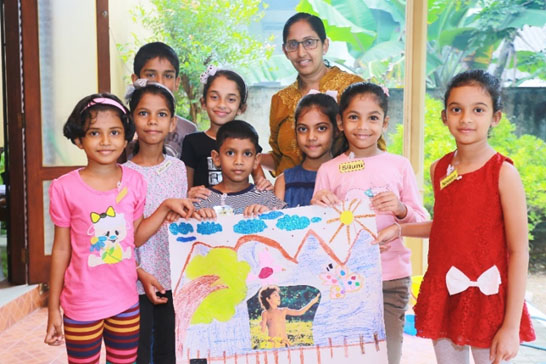
In school you will most likely see syllabuses that highlight the use of the left brain and downplay the role of the right brain. Our curriculum is designed to unleash the fullest potential of your mind, body and spirit.
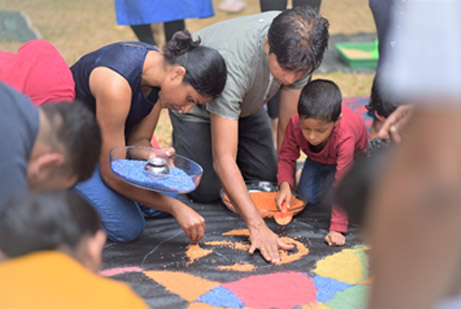
There is an inherent need in humans to create. We are first fascinated
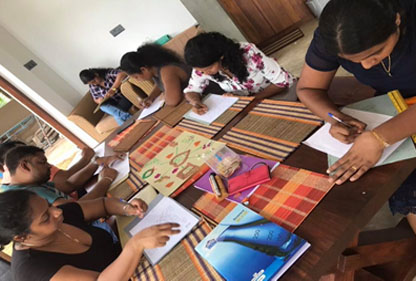
by the materials - the rich colours, the textures,
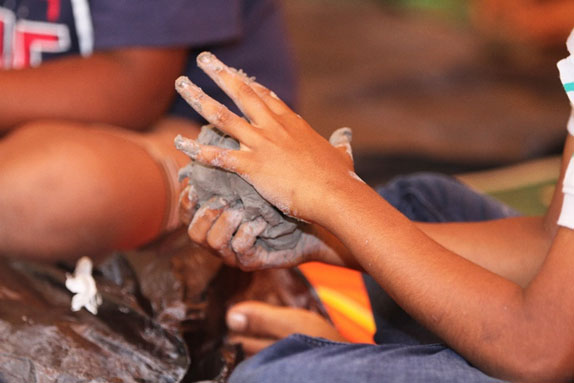
the feel of the paint, clay, pastel in our finger tips.
Our subconscious tells us what colours we need to work with,
Our mind tells us what we need to create.
Our subconscious tells us what colours we need to work with,
Hebbian Theory
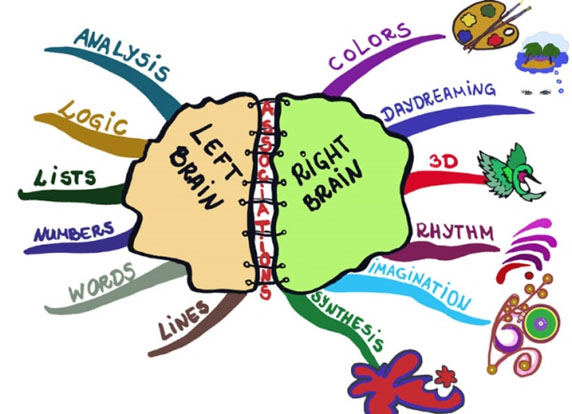
Donald Hebb studied brain activity and its relationship to learning. He found that activities that occasion simultaneous firing of neurons will increase the strength of the connection of those neurons which builds brain capacity. The brain is divided into two hemispheres or sides – right and left.
The left mode handles verbal, analytic, symbolic, abstract, temporal, rational, digital, logical, linear thinking. The right mode handles the nonverbal, synthetic, concrete, analogical, nontemporal, non-rational, spatial, intuitive, holistic brain functions. We have to develop both sides for a better personality.
Like intelligence or beauty, creativity is a trait that is seen as rare and inherent, a trait that is intuitive and cannot be taught; the works that are produced by those with creativity are awesome and unattainable.
However, if children are given the proper opportunities to practice and develop their creativity, as with any muscle in the human body, the trait will become stronger and feel more natural.
What are the Creative Arts?
According to the New Oxford American Dictionary, creativity is defined as: The use of the imagination or original ideas, especially in the production of an artistic work.
Arts is a way of - draw from within. It is a means of symbolic communication. It can help people to resolve conflicts, solve problems and formulate new perceptions that in turn lead to positive changes, growth and healing. With therapeutic guidance and support art can facilitate new understanding and insights.
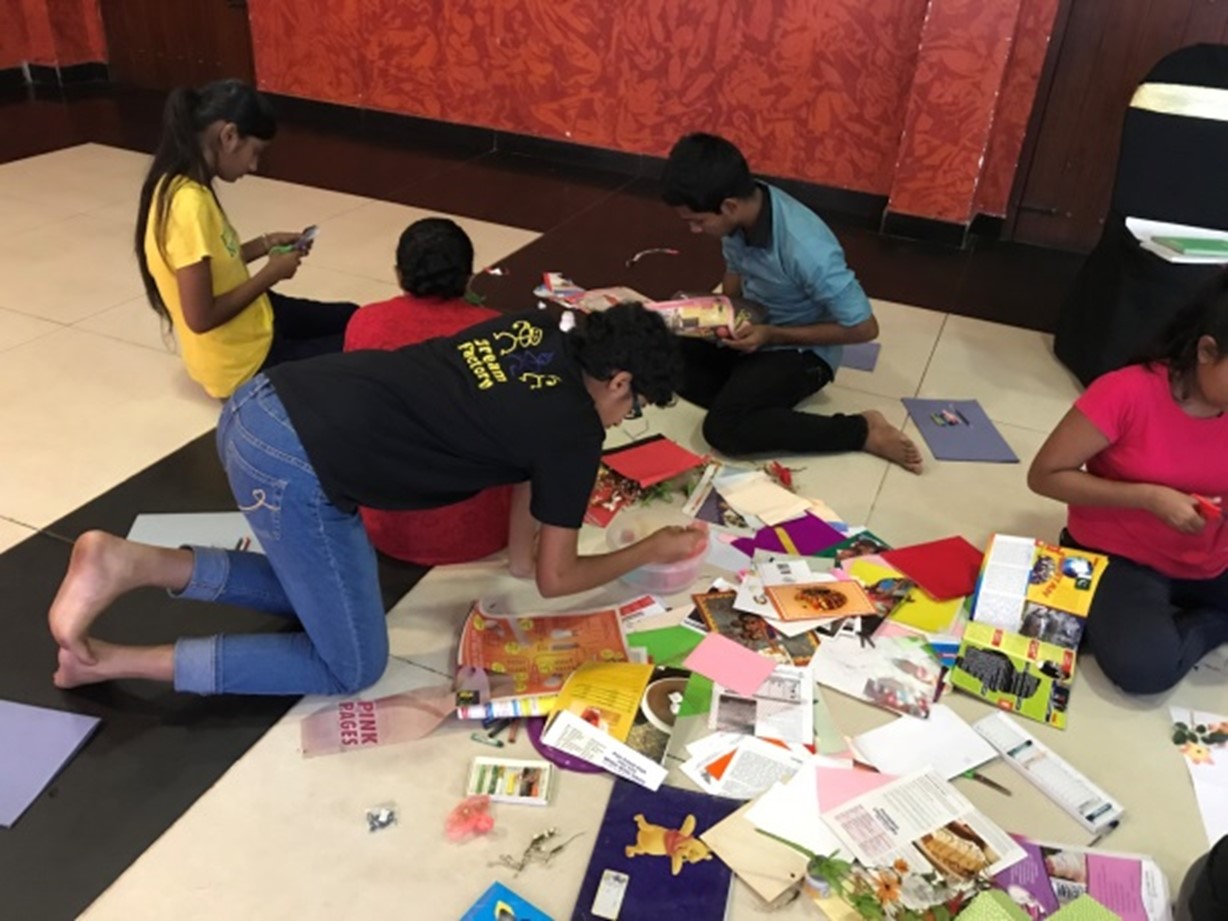
In relation to children, the creative arts are activities that engage a child’s imagination and can include activities such as art, dance, drama, puppetry, and music. They stimulate and help children cultivate their abilities across virtually every domain, and they are open-ended activities, fostering flexibility of the mind. And most important of all, the creative arts emphasize the process, teaching kids in a world that is progressively more and more product-driven that the method by which you arrive at the destination is as or more significant than the destination itself.
The benefits of including and stressing the creative arts in an early childhood education are numerous and expansive, ranging from the physical to the emotional to the mental.
Creative Arts develop children’s physical ability
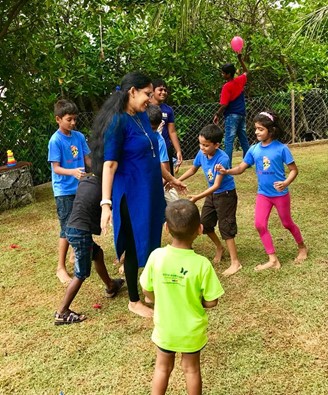
Varying types of creative arts activities help children to build up their abilities in both categories of motion. For example, when a child grips and uses a paintbrush, or glues buttons and yarn to paper, he is engaging and advancing his fine motor skills. However, when he dances, skipping or clapping or jumping in time to the music, he stimulates the part of the brain that controls gross motor skills. Childhood utilization of these areas is critical to later adulthood abilities.
Creative Arts Controls children’s emotions
Unsurprisingly, the creative arts provide an outlet for young children to explore and gain control over their emotions, too. The arts help young children to explore their emotional range so that they’ll be better equipped to deal with the ups and downs that will become a part of their lives as they grow older. Theater, dramatic play, and role playing, in particular, are all especially suited to developing children’s emotional abilities.
Creative Arts develop children’s cognitive ability
Exploring and participating in creative play triggers the use of kids’ imagination, which in turn stimulates and expands their mental capacities. According to Lev Vygotsky, such play enables kids to learn new things, going beyond the previously held belief that children reflect the world around them to state that they internalize and begin to understand it. For example, if a child with underdeveloped fine motor skills sees her friend excelling at painting, she will copy his movements and thus improves her abilities.
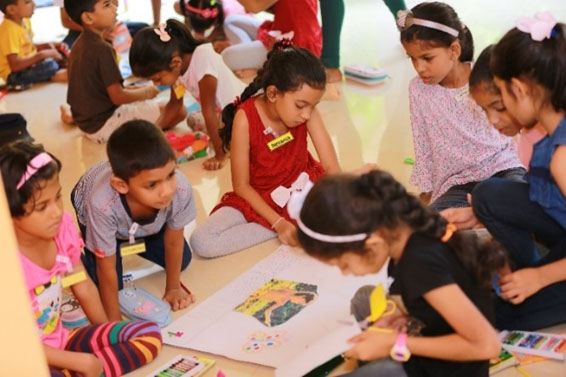
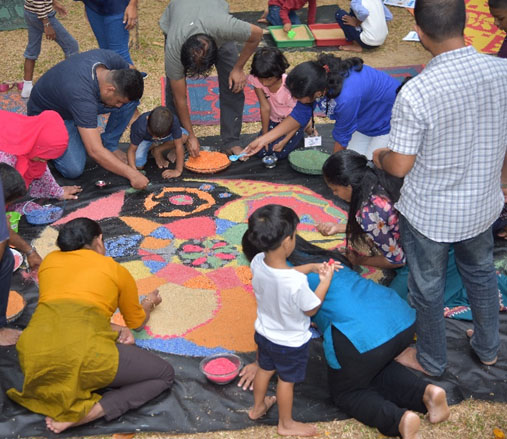
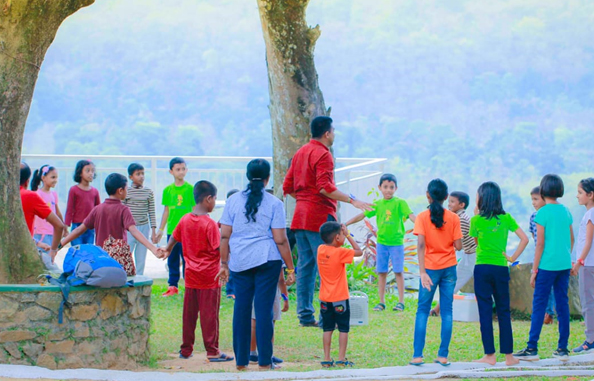
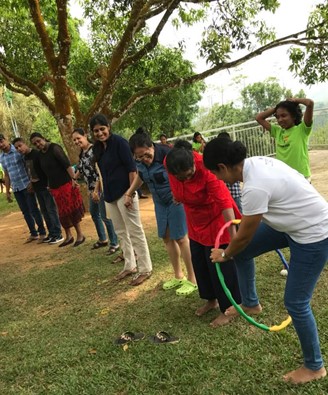
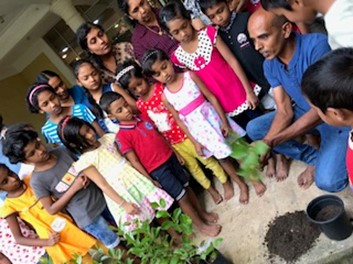
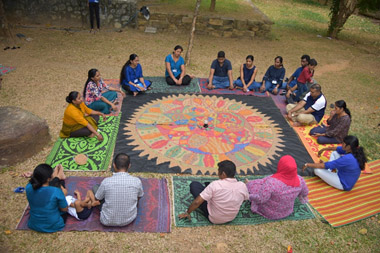
Learn how to become part of a team. It promotes problem solving, development of social skills, able to learn more about speech, learn more about mixing and sharing with others.
Fell less stressed, Feel better about themselves, Improve concentration levels, Increase energy levels, Maintain a healthy weight, build and maintain friendships as they grow older.
The aim of play is to decrease those behavioral and emotional difficulties that interfere significantly with a child's normal functioning. Inherent in this aim is improved communication and understanding between the child and his parents. Less obvious goals include improved verbal expression, ability for self-observation, improved impulse control, more adaptive ways of coping with anxiety and frustration, and improved capacity to trust and to relate to others.
To increase cooperative and social behaviors in children play is very important. Research study examined the possibility that children's social behavior might also be significantly influenced by the nature of the available play materials. Children in an urban recreation center were systematically provided with toys designed for social or isolate play. It was found that social play occurred only 16% of the time when the children were provided with “isolate” toys, whereas social play occurred 78% of the time when children were provided with “social” toys. Thus, the selection of play materials should be an important consideration in any effort to teach children social behaviors.
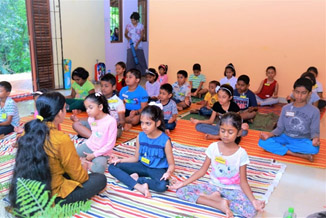
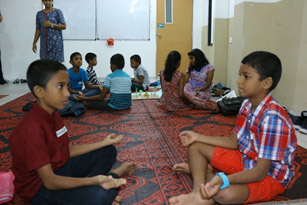
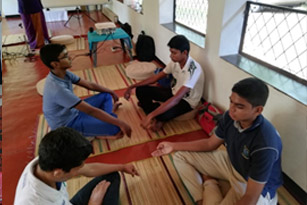
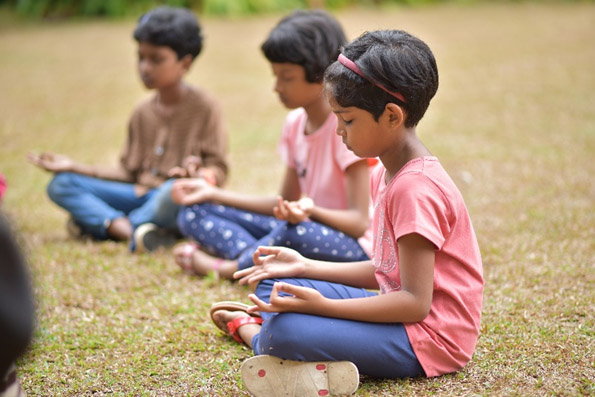
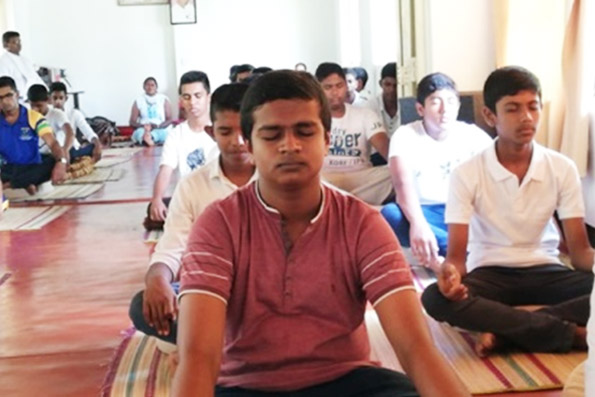
MINDFULLNESS MEDITATION
By letting go of worries and concentrating on the here and now, we let go of anger, frustration, irritation annoyance and worries, and attempt to reach “‘equanimity’ — stillness and balance of mind,”
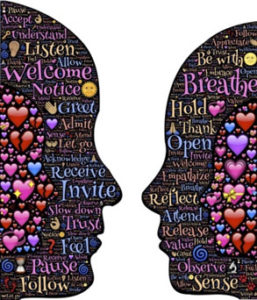
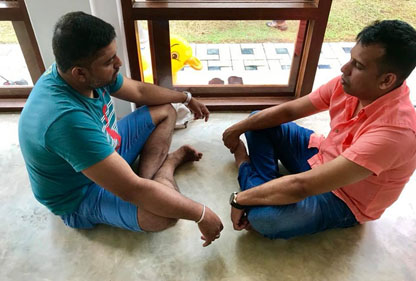
It is an interpersonal meditation practice. It brings the mindfulness and tranquility of silent meditation directly into our experience with other people. As humans, we are relational beings; as we begin to wake up, clarity and freedom can illuminate our relationships with others. Insight Dialogue draws from traditional Buddhist wisdom, but it is not a Buddhist practice in the religious sense. There is nothing about the practice that would preclude people of any faith or belief system from participating. In Insight Dialogue we come face-to-face with core human experiences.
Refer: www.metta.org
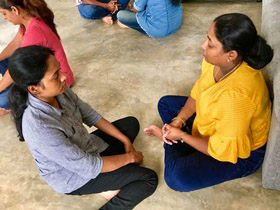
Interpersonal Meditation
Interpersonal Meditation offers a bridge between our solitary meditation practice, and our relational lives. Our relationships can be a source of happiness when we feel connected to others, and a source of stress when miscommunication inevitably happens. This will support you in embodying a greater awareness in interactions with others.
The sessions include periods of silent meditation, movement and interpersonal meditation. We will work with carefully guided and timed contemplations, in pairs or in small groups, to enable participants to be able to observe the mental and emotional habits that are usually invisible to them in the flow of stressful, or even pleasant, communication. In this way, reactive patterns of communication become clearer, and thereby choices become available to communicate with greater skill. Ultimately our relationships can transform from a source of unhappiness to a source of enrichment, and even joy.
• develop skills for staying present when communicating; • experience greater ease in relationships, with yourself and with others; • deepen connection with others, including friends, family, and colleagues; • recognise emotional and psychological patterns of reactivity in your interactions with others; • increase relational confidence; • and work one-to-one with people, deepening your capacity for empathy.